
test heading
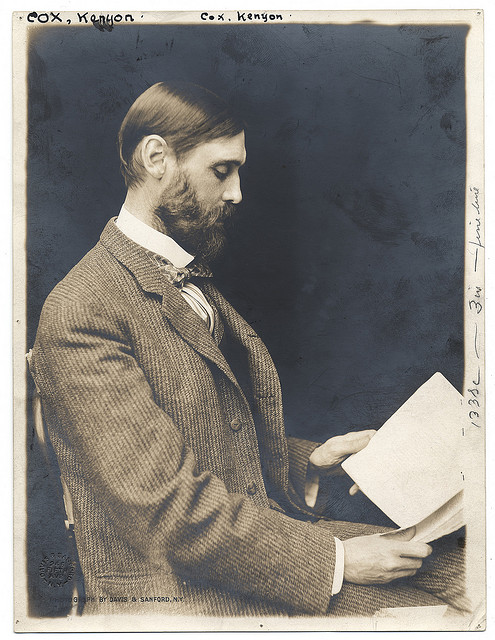
(ganked from The Smithsonian Institution. You will probably be as old as this man is now by the time your book gets published. Or at least feel like it.)
It takes a long time to publish books.
Probably this is because we publishers are cruel, unreasonable people whose goal in life is to thwart authors from having their books right now. “Now would be nice, but two years from now is just around the corner!” we cry heartlessly, treading on the hopes and dreams of new-minted young authors. Then we go out to lunch and drink martinis, smiling at the pain we’ve caused.
The first reason that publishing books takes a long time is that we believe in the editorial process. We think that it helps authors to make their own best book possible if there is someone for them to talk to about the process — someone who is paid to think thoughtfully, ask difficult questions, and know the market inside and out, so your ‘My Life With a Squid’ memoir isn’t coming out at the same time as someone else’s. Understandably, that takes time — it takes time to review drafts of scrips, of thumbnails, of inks and letters and pencils and colors. Because we like to have that whole interactive editorial process while the book is being made, we try to sign up books at the beginning of their life.
By our standards, it’s a fast book when we sign a contract and have the final art two years later. Some of our authors have turned in things sooner than that, and we’re always kind of astounded at them. We’ve definitely published books where we’ve signed a contract and had the final art three or four or five years later. Sometimes this is because authors have day jobs, they do other freelance work, or they’re also doing a book for someone else. And sometimes this is just because some stories take time to figure out how to tell exactly right.
The second reason that publishing books takes a long time is that after our books are turned in, they go through a production and sales/marketing process.
After your book is turned in, it needs:
Layout. Pages of original art don’t magically become books. They have to be scanned, possibly cleaned up, and put into a larger document — we use InDesign to lay out our books. Some people do their art digitally and just send us the files, so we can skip a week of scanning at this step. But we’ve still got to place all the pages in the larger document, put in page numbers, exciting bits like title pages and half-title pages, back matter, and the indicia page (that’s where the book information and copyright and stuff goes).
A Cover. The cover is the #1 selling tool for a book — it’s the thing that everyone looks at. The #2 selling tool is the sign, because that what shows when a book is spine-out on a shelf. So we want to work with authors to make the best, most appealing cover possible. That typically means multiple sketches from the author which get shown to a number of different people at Macmillan (publishing and sales and marketing) so we make sure we’re going in the right direction. Oh, and we have to design the back cover and the flaps, too.
Copy-editing. We like books where everything is spelled correctly! We try to make sure that happens.
When we’ve got all those pieces together, the book goes back to the author so they can look over the layout, cover, and the copy-editor’s suggestions. Then the editor compiles all their changes and the author’s changes and the designer does one last pass of the book to send to the printer.
That whole process takes months. No, honestly: months. There are typically four to six months between the time that authors turn their books in and we send the books to the printer.
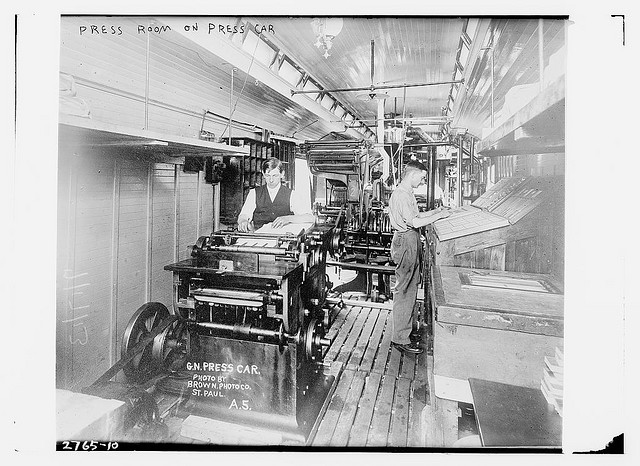
(ganked from The Library of Congress. This is totally what the printers we print our books on today look like. I swear.)
And you’re done, right? Well. . . .
The printer typically does three passes of proofs of the book. The first ones get looked over by First Second and by the authors. The second pass gets checked by First Second to make sure the changes we asked for in the first pass happened correctly. Then there’s one last pass with any final changes.
Then the book goes into blues (fun fact: called that because they used to be blue), where we do a final check before printing to make sure that they didn’t put any of the pages upside-down or backwards.
Then the book is printed! And . . . if it’s a color book it’s in China, which means it won’t get to the United States for another two months.
We typically take another three months after the books arrive in our warehouse before we publish them. We use that time to market the books, sending them to reviewers, teachers, and librarians who will buy or recommend them.
What does this mean in practical terms? Well, the books we have coming out next fall (in 2013, to be clear) were mostly turned in already this August. This means that even after that two or three or five years of creative work an author does on a book, there’s another entire year of production and marketing before that book is in stores.
Here’s the thing: we believe in that year. At First Second, we’ve very proud of our production standards; we want our books to look the best they can. And that doesn’t happen unless we’re doing multiple rounds of proofs and taking care with our copy-editing. And we’re proud of our marketing, too — we do get books out to a variety of different audiences all over the US. But we need that last year to put all these pieces together — to do our part to make our authors’ books the best books possible, and to reach the most people possible.
So if you’re an aspiring author, something to think about: publishing books takes a lot of patience.