

test heading
(from the Tyne & Wear Archives and Museums — this is actually a picture of a blind girl who’s examining these dead birds so she can have a better understanding of what birds are. Crazy! Also: awesome!)
The internet has lately been in a flurry about young adult literature. Are books for teens these days universally too dark, containing dread subjects like suicide, anorexia, rape, abortions, drug use, etc.?
(Having just, in the past week, read YA books about summer camp, art crime heist capers, and kissing, I am inclined to say no.)
However, I think the dust may have been kicked up here not because of the issue books that populate some of young adult literature, but because of nomenclature.
This may seem a strange digression, but all of you scratching your heads, consider: what is young adult literature?
Up until about 1990, young adult literature was comprised of Go Ask Alice, The Catcher in the Rye, Annie on My Mind, and A Seperate Peace. And Cormier’s The Chocolate War.
Now, those are all very nice books, but THAT IS ALL THERE WAS.* You have to admit, that’s an extremely limiting sample-set from which to create a general understanding of what YA is — imagine discussing memoir or poetry or critical non-fiction or novels-in-verse and only having five examples to go by.
As a result, there wasn’t much general discussion of — or reading of — young adult literature. Kids read classics intended for children — like The Wizard of Oz and Little House on the Prairie — until they were too old to read ‘kids books’ and then they read books that were written for adults.
It’s only been recently that such thing as ‘a teen section’ has existed in libraries and bookstores. This is undiscovered country, and as such prime fodder for discussion.
So, what is this emerging young adult literature? Since it’s so new, there isn’t a single definition that has been passed down unto us by our parents’ parents or our English classes — if people have an instinctive feeling for what YA is, it isn’t because there’s a generally accepted/acknowledged understanding, but because they have made it up in their own minds.
This causes problems.
So one person thinks that young adult literature is all books for people ages ten to twenty.
Another thinks that young adult literature is all books for people in high school, usually ages 14 – 18.
Yet another thinks that young adult literature is all books that have a young adult protagonist.
This one thinks that young adult literature is all books that address issues that are specifically relevant to young adults.
That one thinks that young adult literature is all books that the authors and publishers label as ‘young adult’ or ‘teen.’
These five definitions (and there are others) overlap in places, but they’re by no means the same thing. And that’s a problem, because how can you talk about something reasonably when no one is working from the same definition? When someone who thinks YA Lit is for ages 10 – 20 turns to someone who thinks YA Lit is for ages 14 – 18 and says, ‘the issues in these books are too sophisticated for some YA readers,’ how can Person 1 be met with anything but blankness and incomprehension?
(We have different ideas about what YA Lit is in our office, and First Second is only four people! And we’re a publisher — it’s our job to do this professionally! That’s just ridiculous — but nonetheless an accurate representation of the state of the general opinion.)
Until there’s a common understanding of terms, having this discussion is like the blind men having an in-depth analysis of the affect of the elephant on its environment.
This is hyperbole. But not by much.
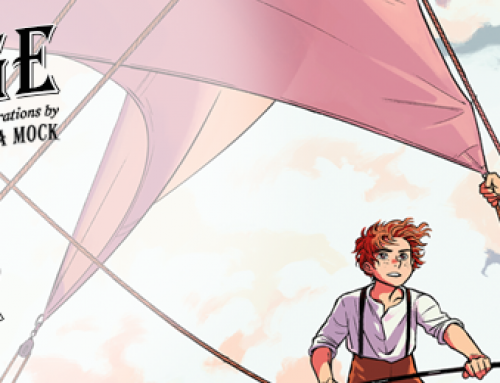
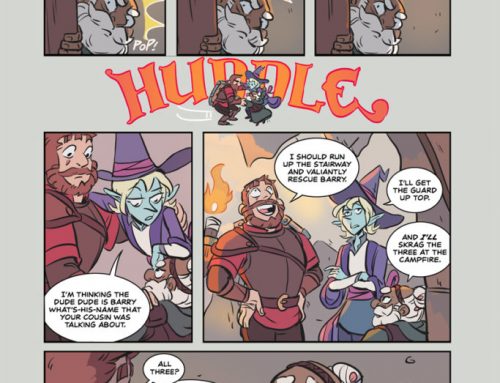
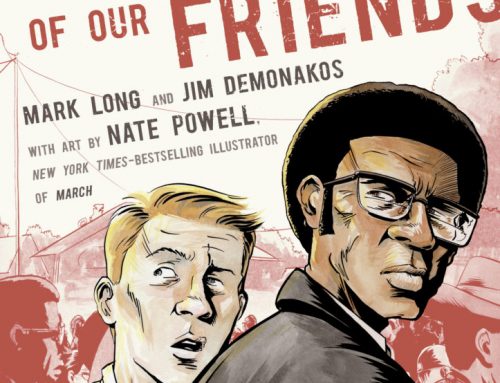
I was someone who was wandering over to the adult section of the library from about age 12 on. We had a small section of young adult books at our local library — but it was about two small shelves shoved in a corner. If I wanted the good stuff, I had to go looking.
And honestly, I’m kind of jealous of the selection teenagers have today. We had Christopher Pike, who I kind of enjoyed overall, but fantasy and sci-fi was pretty few and far between.
Still, I’m someone who believes children aren’t going to be harmed by reading what they want. Books are a safe way to explore things. I didn’t always read things I understood but I’m still happy I read them. Those things made me curious about the world.
Books need to be a challenge. I don’t think YA needs to be defined in absolute terms but I’m happy that it’s growing. I would’ve loved it. It would’ve given me more options.
(And I still wander over to the YA section of the bookstore quite a bit now.)